Book Bits and Pieces

Most library holds are paused right now while the library system switches over to a new delivery service. This is sad because I don’t have a constant supply of new and exciting books. However, this is also a very good thing because I am slowly catching up on all the books that have inundated my house over the last few months. I thought a would share a few quick highlights from the books I have read most recently.
I am slowly working my way through all of Janice Holt Giles’ books. I read them as a teenager (I am starting to feel like that is a constant refrain in my life) and don’t remember much about them except that I liked them. Giles has such a way with words. The Enduring Hills is her first novel. It was originally published in 1950 and tells the story of Hod Pierce who grew up in Kentucky Mountain country. He loved his home and family but also wanted to escape and see the wider world. He does for a while but eventually, the Kentucky land he loves calls him home. Here is a quote I liked. Hod’s grandfather is talking to him about his life.
“Grampa, you been content most of your life?
Grampa raised his arms and stretched mightily. “Why?”
“Just wondering’.
The old mand held the boy’s eyes with a clear, straight look. “Hod,” he said finally, “I reckon they’s a time in ever’ man’s life when he hurts all over with discontent. I’ve had mine. An’ only the good Lord an’ your gramma kept me from makin’ a plumb mess o’ my life.” He laughed gently. “An’ the time was when I laid most of the mess to yer gramma.” He paused, and his look strayed toward the kitchen where Gramma was redding up the dishes. Then it came back to Hod. “Content? I reckon we wasn’t intended to be content for too long at a stretch. But mostly I’ve liked livin’. I’ve had me a little piece o’ land o’ my own. . . an’ a roof over my head that belonged to me. . . an’ I ‘ve raised what I put in my stummick an’ it set light there on account of it. I’ve had me a good woman to go along with me, an’ kids that’s pleasured me. I’ve had work to lay my hand to. . . work o’ my own choosin’. An’ folks around to neighbor with. Don’t know what more a man could want. Livin’ jist about biles down to that, I’d say. Ifen you take e’er thing away from it, a man ain’t got full measure. Ifen you try to add to it, hit won’t hold no more. Yes, I been right content.”
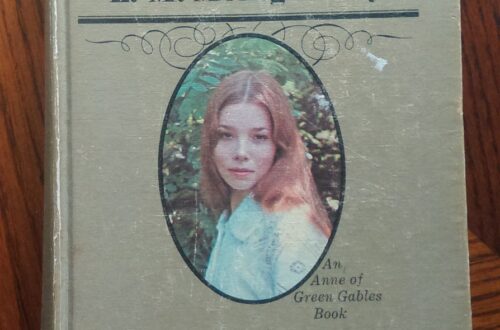
Later on in her life, Giles wrote that, much as readers loved The Enduring Hills, she felt it was too full of purple prose. Her later writing became much sparer and streamlined. I, however, raised on Anne of Green Gables, enjoy a bit of purple prose now and then. Here is one more bit from when Hod is leaving Kentucky to go to war.
The days went by all too fast, and as they slipped carelessly into the past, Hod threaded the present carefully through his fingers and knotted it into himself. He pulled down the hills and packed them into the places that would be empty inside of him. He stored the baby’s gay laugh and rippling stream of words into the voiceless regions of his mind, to drink from when the sands were hot and dry. He took the slow, sleepy days and stitched a cushion against the sleeplessness to come. He wrapped Piney Ridge around him and pinned the edges down, tight.
He said good-by.
Immediately upon finishing The Enduring Hills, I picked up A Little Better Than Plumb: The Biography of a House by Henry and Janice Holt Giles. It is the account of the building of their log house in the hills of Kentucky.
There was a plan, a blueprint of sorts, changed and shifted so often that by the time we finished it was smudged and spotted beyond recognition; there was my blithe optimisim and vast ignorance and bullheaded obstinacy; there was Mister G.’s ingenuity and commonsense understanding of engineering; and on the part of two neighbors who did much of the actual building there was a good-humored acceptance of our queer ideas, plus great native skill. I think they thought if we were crazy enough to throw our money away building a rambling old log house they might as well salvage a little of it for us by building as good a house as could be built.
This is a lovely, rambling account of the trials and tribulations of building a home interspersed with stories about neighbors, grandchildren, the countryside around them, and her writing career. The majority of the book is written by Janice Holt Giles but Henry Giles writes a few chapters and the two voices work well together just as they obviously worked well together in their day-to-day lives. I was curious about the house after reading the book and did a little puttering around online. It is possible to visit their log home in Kentucky. It is listed on the National Register of Historic Places. That would be a lovely trip to take one of these days.
I am almost done reading Writing the War: Chronicles of a World War II Correspondent. This is the correspondence between Charles Kiley and Billee Gray. Charles was a correspondent for the U.S. Army’s Stars and Stripes newspaper and reported on the war from London, Ireland, Normandy, Paris, and other locations. Billee was the woman he fell head-over-heels in love with right before he shipped out. They only spent a little bit of time together, became engaged, and then were separated for years. Their love grew over the course of many, many letters. Here is a fulsome quote from Charles telling Billee how he feels about her.
I love you because when my eyes first found you I tingled all over; because you are soft, tender and sincere; because you are intelligent with just enough devilry; because your eyes are sleepy and because I haven’t lost the taste of your first kiss; because you like to dream the way I do and are sensitive the way I am; because you love children and because you are beautiful, even in the kitchen wearing an apron and an unruly curl on your forehead; because you are independent and could tell me to go to ___ and (maybe) get away with it; because you know a first baseman from a fullback, are romantic and enjoy good music, good books and good scotch; because you are all I ever wanted to come live with me; because you give me confidence and ambition; because you taught me faith; because you remember the little things that mean so much; because I missed you so much the ache misted my eyes; because I wouldn’t or couldn’t go on from here without you; because you are all that matters to me; because your nose is titlted; because you love me! and, even if you didn’t, I would sitll love you!
Well. I think he told her.
Their letters are interspersed with extracts from Charles’ diary and articles he wrote for the Stars and Stripes. I always find volumes of letters interesting because the reader gets such a feel for the writer’s life. Billee talks about her brother enlisting, her friend worrying about her husband in a Japanese prisoner-of-war camp, her little nephew who contracted Polio, and many other smaller details of her everyday life. I went to bed last night before I could finish it but I did glance at the last page to make sure they got their happy-ever-after. They did.
I still have five library books to get through before delivery service resumes. It is a race against time. I’m pretty sure I won’t catch up but I am going to give my all in a good cause.



2 Comments
Katrina
I really hope that you do manage to visit the log cabin one day, it looks lovely. I was so pleased to see the use of the word ‘redding’ as in redding up the dishes in that extract, it’s an old Scottish word originally.
jllee656
It would be a fun trip but it is about 7 hours away so I would have to find other things to do in the area. It makes sense that ‘redding’ is an old Scottish word. A lot of the Kentucky Hill country dialect is derived from Scottish and Irish settlers.